How to Write SEO Friendly Titles and Meta for tezcon.space
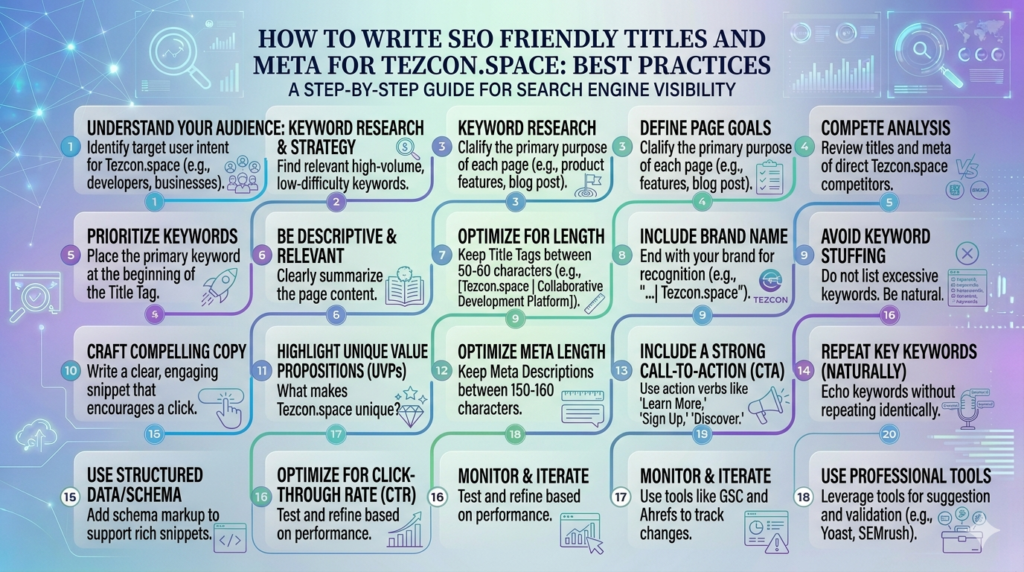
In the competitive world of search engine optimization, crafting the right titles and meta descriptions can make the difference between getting noticed or being overlooked. For tezcon.space, writing SEO friendly titles and meta is crucial to attract organic traffic, improve click-through rates (CTR), and enhance overall search visibility. This comprehensive guide will walk you through actionable strategies, examples, and best practices for creating SEO-optimized titles and meta descriptions that perform in 2026 and beyond.
Why SEO Friendly Titles and Meta Are Important
Titles and meta descriptions are often the first thing a user sees in search results. They are not just decorative—they influence both search engine rankings and user behavior. Here’s why they matter for tezcon.space:
- Improve Click-Through Rate – A compelling title and meta description can persuade users to click on your link over competitors.
- Signal Relevance to Search Engines – Well-crafted titles and meta help Google understand your content topic.
- Enhance User Experience – Informative and clear meta descriptions set user expectations, reducing bounce rates.
- Support Keyword Strategy – Integrating primary and secondary keywords naturally helps rank higher for targeted queries.
By optimizing these elements, tezcon.space can increase both traffic and engagement, giving it a competitive edge.
Step 1: Conduct Keyword Research
Before writing titles and meta, you must identify the right keywords:
- Primary Keywords – Focus on main search terms your audience uses. Example: “SEO friendly titles and meta.”
- Secondary Keywords – Use related phrases like “meta description optimization,” “title tag best practices,” and “on-page SEO tips.”
- Long-Tail Keywords – Target highly specific queries like “how to write SEO friendly meta descriptions for blogs.”
Using keyword research tools like Google Keyword Planner, Ahrefs, or SEMrush ensures your titles and meta descriptions align with search intent and drive qualified traffic.
Step 2: Craft SEO-Friendly Titles
Best Practices for Title Tags
- Include the Main Keyword Naturally – For tezcon.space, ensure your primary keyword appears once and reads naturally.
- Keep It Under 60 Characters – Search engines typically display the first 50–60 characters.
- Make It Compelling – Use action words, numbers, or power words to attract clicks.
- Avoid Keyword Stuffing – Overloading titles with keywords can harm both readability and rankings.
- Use Branding When Appropriate – Example: “How to Write SEO Friendly Titles and Meta | tezcon.space.”
Example Titles for tezcon.space
- “How to Write SEO Friendly Titles and Meta for Maximum Clicks”
- “SEO Friendly Titles and Meta Tips for tezcon.space Blogs”
- “Step-by-Step Guide to SEO Friendly Titles and Meta”
A well-optimized title ensures your page stands out in search results while signaling relevance to both users and search engines.
Step 3: Write Compelling Meta Descriptions
Meta descriptions summarize your page content and appear under the title in search results. They should:
- Include the Main Keyword – Naturally, without stuffing.
- Be Between 150–160 Characters – Ensures full visibility in search results.
- Highlight Value Proposition – Explain why users should click.
- Include a Call-to-Action (CTA) – Words like “learn,” “discover,” or “try” encourage engagement.
Example Meta Descriptions for tezcon.space
- “Learn how to write SEO friendly titles and meta descriptions that boost traffic and improve search rankings for tezcon.space.”
- “Discover actionable tips for crafting SEO friendly titles and meta that increase click-through rates and drive organic growth.”
- “Step-by-step guide to SEO friendly titles and meta for tezcon.space, helping you rank higher and attract the right audience.”
Compelling meta descriptions not only improve CTR but also reinforce the relevance of your content for your target keywords.
Step 4: Integrate Secondary Keywords
Secondary keywords help expand topical relevance. For tezcon.space, naturally include phrases like:
- Meta description optimization
- On-page SEO tips
- Keyword placement in titles
- Click-through rate optimization
For example:
“Master meta description optimization and on-page SEO tips to craft SEO friendly titles and meta for tezcon.space that improve click-through rate optimization.”
Integrating secondary keywords enriches your content without sacrificing readability.
Step 5: Use Numbers, Power Words, and Emotional Triggers
Titles with numbers or emotional triggers tend to attract more clicks. Examples:
- “10 SEO Friendly Titles and Meta Tips for tezcon.space”
- “Proven Techniques to Write SEO Friendly Titles and Meta”
- “Boost Your Rankings with SEO Friendly Titles and Meta Today”
These elements make your content more enticing in search results and improve CTR.
Step 6: A/B Testing Titles and Meta
SEO is not static. Conducting A/B tests allows you to determine which titles and meta descriptions perform best:
- Create multiple variations of your title and meta.
- Monitor CTR, bounce rate, and time on page using Google Analytics or Search Console.
- Implement the best-performing versions to maximize traffic.
For tezcon.space, ongoing testing ensures continuous optimization and better results.
Step 7: Align Titles and Meta with Page Content
Ensure your titles and meta accurately reflect the content:
- Misleading titles may increase clicks but raise bounce rates.
- Include key points from the page in the meta description.
- Maintain a consistent tone and style with the rest of your site.
Alignment increases user satisfaction and reduces the risk of penalties for misleading content.
Step 8: Optimize for Mobile Search
With the majority of searches now on mobile:
- Keep titles concise and readable on smaller screens.
- Ensure meta descriptions are truncated properly for mobile display.
- Focus on local or intent-based keywords for mobile users.
Mobile optimization enhances the user experience and boosts rankings for tezcon.space.
Step 9: Monitor Performance
Regularly monitor how your titles and meta are performing:
- Track rankings for targeted keywords.
- Analyze CTR and impressions in Google Search Console.
- Update underperforming titles and meta with new keywords or CTAs.
Continuous monitoring helps tezcon.space stay competitive and adapt to search trends.
Step 10: Advanced Tips for tezcon.space
- Use Structured Data – Implement schema markup to improve visibility in rich snippets.
- Leverage Social Sharing – Optimize titles and meta for social media previews.
- Avoid Duplication – Ensure every page has unique titles and meta to prevent cannibalization.
- Include Brand Name Strategically – Enhances recognition and trust.
These advanced tactics take your SEO title and meta optimization to the next level.
Conclusion
Writing SEO friendly titles and meta for tezcon.space is essential for attracting organic traffic, increasing click-through rates, and improving search engine visibility. By conducting keyword research, crafting compelling titles, writing engaging meta descriptions, and integrating secondary keywords naturally, tezcon.space can outperform competitors and deliver valuable content to its audience.
Regular A/B testing, alignment with page content, mobile optimization, and performance monitoring ensure that your SEO strategy remains effective over time. Implement these tips consistently, and tezcon.space will see measurable growth in search rankings, audience engagement, and overall website success.