Top 20 Long Tail Keyword Ideas for tezcon.space Ranking
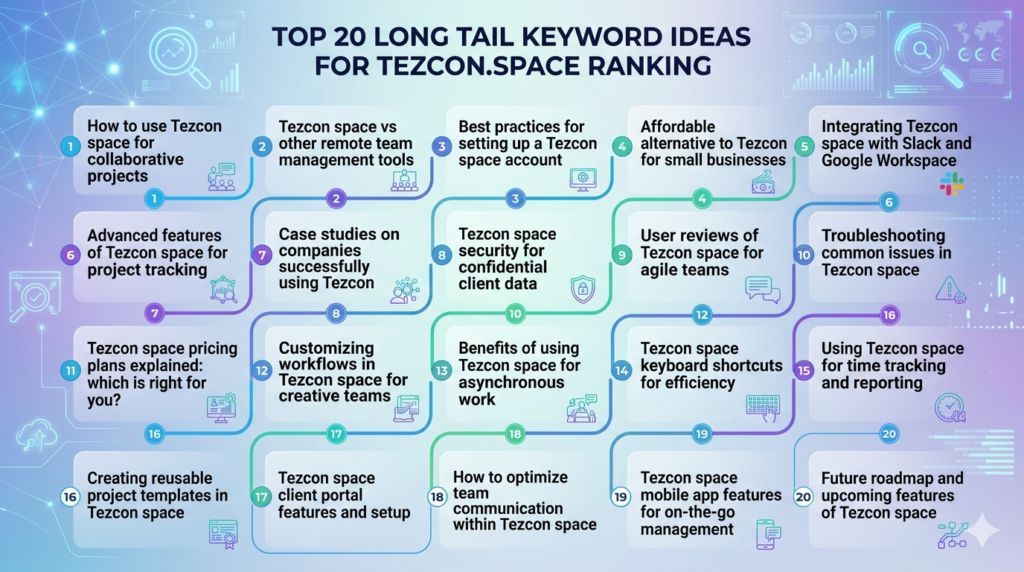
In the world of SEO, targeting the right keywords can make or break your website’s ranking potential. Generic, high-competition keywords often leave smaller websites struggling to compete. That’s why long-tail keywords are a game-changer for sites like tezcon.space. These longer, more specific search phrases not only drive targeted traffic but also improve conversion rates. In this guide, we’ll explore the top 20 long tail keyword ideas for tezcon.space ranking, showing you how to leverage them for maximum SEO impact.
Why Long Tail Keywords Matter for tezcon.space
Long-tail keywords are search phrases typically containing three or more words. They are less competitive but highly targeted, making them ideal for websites aiming to rank quickly and attract qualified traffic.
Benefits for tezcon.space include:
- Higher Conversion Rates – Visitors searching for specific terms are more likely to engage or take action.
- Less Competition – Easier to rank on Google compared to broad, one-word keywords.
- Better User Intent Matching – Long-tail keywords align closely with what users are actually looking for.
- Supports Content Strategy – Helps plan blog topics, FAQs, and guides with a clear SEO focus.
In 2026, search engines prioritize relevance and user intent, making long-tail keyword optimization more crucial than ever.
How to Find Long Tail Keywords for tezcon.space
Before diving into the list, it’s important to understand how to generate effective long-tail keywords.
Step 1: Use Keyword Research Tools
Tools like Ahrefs, SEMrush, Ubersuggest, and Google Keyword Planner help you identify phrases with high intent and low competition.
Step 2: Analyze Competitor Keywords
Look at what top-ranking competitors in your niche are using. Identify long-tail phrases they rank for and adapt them for your site.
Step 3: Focus on Search Intent
Consider the user’s purpose behind a search query. Is it informational, navigational, or transactional? Matching intent improves engagement and conversions.
Step 4: Include Location or Niche Modifiers
For tezcon.space, you can add modifiers like “for blogs,” “in 2026,” or “technical SEO” to make keywords more specific and actionable.
By following these steps, your long-tail keyword strategy becomes structured and SEO-driven.
Top 20 Long Tail Keyword Ideas for tezcon.space Ranking
Here’s a curated list of the top 20 long tail keyword ideas that can help tezcon.space improve search rankings and attract targeted traffic:
- “Technical SEO Tips for Small Websites” – Perfect for in-depth guides and tutorials.
- “How to Improve Page Load Speed for Blogs” – Combines speed optimization with blogging SEO.
- “Step-by-Step Keyword Research for 2026” – Long-tail phrase targeting future SEO trends.
- “Backlink Strategies That Actually Work” – Highly actionable for link-building posts.
- “Content Marketing Tips for New Bloggers” – Aligns with educational and actionable content.
- “SEO Tools for Tracking Organic Traffic” – Targets users searching for practical SEO resources.
- “Blog Optimization Checklist for Search Engines” – A guide-focused keyword for evergreen content.
- “Long Tail Keyword Ideas for Technical Blogs” – Perfect for this content niche and aligns with your site.
- “How to Create an Editorial Calendar for SEO” – Combines planning with search optimization.
- “Improving Core Web Vitals for Better Rankings” – Technical focus on speed and UX.
- “Best SEO Practices for 2026 Websites” – Future-proof and highly relevant.
- “How to Use Internal Linking for SEO Success” – Long-tail targeting site structure improvements.
- “Blog Post Ideas That Rank on Google” – Great for content planning articles.
- “Optimizing Images for Blog SEO in 2026” – Specific and actionable for multimedia SEO.
- “How to Track Keyword Rankings Effectively” – Practical long-tail phrase for tutorials.
- “Step-by-Step Guide to On-Page SEO” – Evergreen keyword for technical optimization posts.
- “Content Promotion Strategies That Get Backlinks” – Targets outreach and link-building topics.
- “SEO Audit Checklist for Small Websites” – Combines technical SEO with actionable steps.
- “Long-Term SEO Strategy for New Blogs” – Targets planners and bloggers building sustainable strategies.
- “How to Increase Organic Traffic With Long Tail Keywords” – Meta-keyword phrase summarizing the benefits of this list.
Each of these long-tail keywords can be directly integrated into blog posts, guides, FAQs, and other content formats on tezcon.space to boost rankings and attract qualified visitors.
How to Use These Long Tail Keywords Effectively
Merely listing keywords is not enough. Here’s how tezcon.space can use them for maximum SEO benefit:
1. Create Dedicated Blog Posts
Each long-tail keyword can serve as a topic for a new blog post. For example, “Technical SEO Tips for Small Websites” can be an entire guide detailing actionable tips.
2. Optimize Headings and Subheadings
Include long-tail keywords naturally in H1, H2, and H3 tags. This enhances relevance for both users and search engines.
3. Use Keywords in Meta Tags
Integrate primary and secondary long-tail keywords in meta titles, meta descriptions, and image alt text for better on-page SEO.
4. Include Internal and External Links
Link relevant long-tail keyword posts to other articles on your site. Also, reference authoritative external sources to boost credibility.
5. Answer User Questions
Many long-tail keywords are question-based. Address these directly within your content, creating FAQ sections for added SEO benefit.
6. Track Performance
Monitor how these keywords perform using Google Search Console or SEO tools. Adjust content and strategy based on click-through rates, impressions, and rankings.
Secondary SEO Tips for Long Tail Keywords
- Content Clustering: Group related long-tail keywords into clusters to improve topical authority.
- Use LSI Keywords: Include Latent Semantic Indexing keywords to support your primary long-tail terms.
- Repurpose Content: Turn high-performing keywords into videos, infographics, or social media posts.
- Regular Updates: Refresh older posts to maintain relevance and rankings.
These practices ensure your long-tail keyword strategy stays effective and sustainable.
Common Mistakes to Avoid
- Targeting Overly Competitive Keywords – Focus on relevance and low-competition terms.
- Keyword Stuffing – Use keywords naturally; overuse can harm rankings.
- Ignoring Search Intent – Match keywords to user needs.
- Skipping Analytics – Always track performance to refine your strategy.
By avoiding these mistakes, tezcon.space can maintain a strong, SEO-friendly keyword profile.
Conclusion
Long-tail keywords are a vital part of any SEO strategy, especially for niche websites like tezcon.space. They drive targeted traffic, improve engagement, and help you rank in competitive search landscapes. By integrating the top 20 long tail keyword ideas for tezcon.space ranking, you can create focused, high-quality content that attracts the right audience.
Remember, the key to SEO success is not just targeting keywords but using them strategically in content, meta tags, internal links, and ongoing content planning. Implement these ideas consistently, and you’ll see measurable improvements in traffic, authority, and search engine rankings.
Long-tail keywords aren’t just trends—they’re long-term SEO assets that, when used effectively, can transform the performance of tezcon.space blogs.